AI adoption in marketing has an accountability problem
 Jay Wong
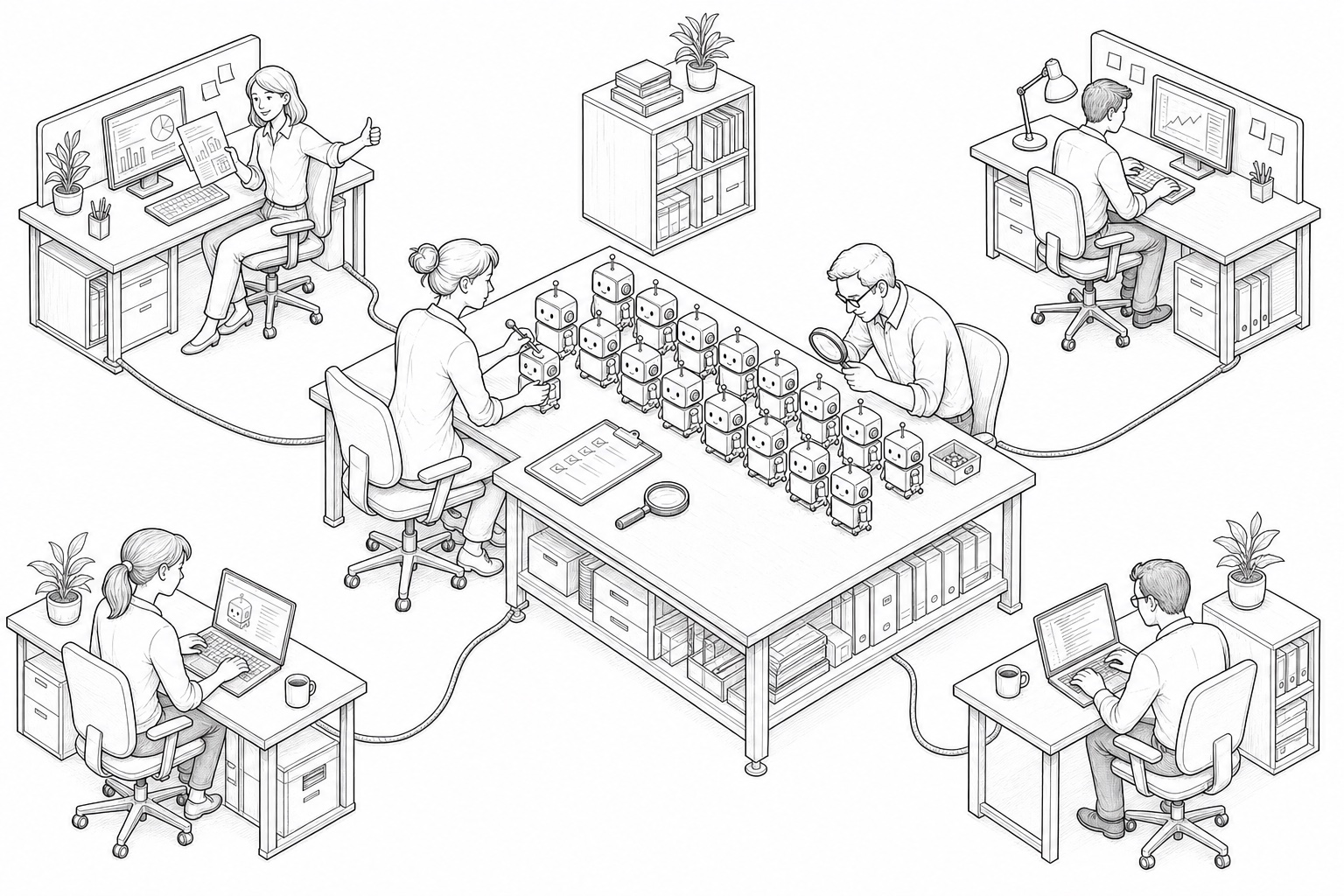
AI adoption in marketing has an accountability problem.
After three years of building marketing agents, I'm convinced it's the biggest bottleneck to scaling them.
Here's what keeps happening
Marketing starts using Claude to analyze campaign performance, pulling data directly from marketing platforms through MCP. Work that used to take hours now takes minutes.
MarTech/Analytics raises concerns. They've spent months building dashboards, data pipelines, and a source of truth. Now agents bypass those systems, and MarTech/Analytics has little visibility into what data they access or whether the analysis is accurate.
IT's AI Center of Excellence gets pulled in. They can enforce security standards, but they lack the marketing expertise and evaluation infrastructure to judge the quality of the agents' work.
So they restrict connector access and autonomous workflows.
And Marketing goes right back to doing the same work by hand. Just slower.
Nobody's necessarily wrong here.
When agents join the team, the team's structure fundamentally changes. But its roles, responsibilities, and accountability haven't caught up.
We can't manage a workforce of humans and agents with an operating model built only for humans.
Who should be responsible for the agents' work?
I think the answer is simple: one team needs to be accountable for agent performance, end to end.
That team can be internal or external. Companies like Stripe and Uber have invested in dedicated AI engineering teams and agent-focused pods.
But here's what we've consistently seen fail: making agent performance someone's second job.
A marketer gets appointed the team's "AI champion." Suddenly, on top of their day job, they're effectively managing dozens of new direct reports. Each one needs instructions, feedback, quality checks, and ongoing improvement.
Or an engineer gets assigned to manage agents alongside their existing projects, without the domain expertise to evaluate the work.
Neither is set up to be accountable for agent performance. (We compared four ways marketing teams staff AI transformation, and where each one runs out.)
The marketer should be the domain expert, not the agent manager.
They should help define what good work looks like, give feedback, and review outputs when needed. But someone else needs to be responsible for turning that feedback into consistently better agent performance.
That's the role of a dedicated AI deployment team. Their job is to gather requirements from stakeholders, translate them into evaluations, and continuously monitor and improve the agents.
How this changes the conversation with IT
Instead of asking IT to approve an agent whose work they can't evaluate, you tell them:
We have a team accountable for this agent's performance. They're responsible for testing its work, monitoring it, and fixing it when something goes wrong.
We need your expertise to set security standards, configure permissions, and make sure our connectors meet your infrastructure requirements.
IT no longer needs to be an expert in the agent's job to do its own job.
Every stakeholder keeps one job
The same principle applies to every other stakeholder.
Marketing defines what good work looks like, reviews representative outputs, and gives feedback. That should be as simple as giving a teammate feedback in Slack.
MarTech/Analytics defines the data sources, business logic, and standards agents need to follow. They contribute evaluations that verify agents use their systems correctly, without having to build or maintain the agents themselves.
IT defines the architecture, security requirements, permissions, and technical standards. They keep control of infrastructure and access without having to judge the quality of marketing work.
The AI deployment team is accountable for making it all work together.
When an agent makes a mistake, there's no question about who fixes it.
- Wrong answer? Improve the instructions and evaluations.
- Wrong data source? Fix the context or integration.
- Business rules changed? Update the agent's knowledge.
The deployment team owns the continuous cycle of building, evaluating, monitoring, and improving agents. They're measured on how well agents perform, not how many they deploy.
This matters even more as agents scale
If you're serious about building an AI-native marketing team, don't plan for five or ten agents. Plan for hundreds, eventually thousands, of agents doing work across your organization.
Who's accountable for all of them?
Who makes sure they use the right context, follow your business rules, produce quality work, and get better over time?
The role we're taking on at Bamboo
We're not just building agents for marketing teams. We're taking accountability for their performance.
And that changes how we think about everything we build.
Our shared team brain gives agents the right business context and keeps it current.
Our evals let us measure performance, catch failures, and keep improving the quality of the agents' work.
Our MCP apps give marketers a familiar interface to work with agents, review their outputs, and give feedback without becoming AI engineers.
These aren't nice-to-haves, vanity metrics, or ribbons on top. They're the infrastructure you need to manage an agent workforce responsibly at scale.
And our marketing expertise isn't incidental. It's foundational. How could you possibly be accountable for the quality of a marketing agent's work if you don't understand marketing?
That's the difference between deploying agents and taking responsibility for them.
The future of AI-native marketing isn't just having more agents. It's having someone accountable for how well they work.
We take accountability for how your agents perform.
Marketing defines good work. MarTech/Analytics and IT set the standards. We own making the agents meet them.
Talk to an expert